
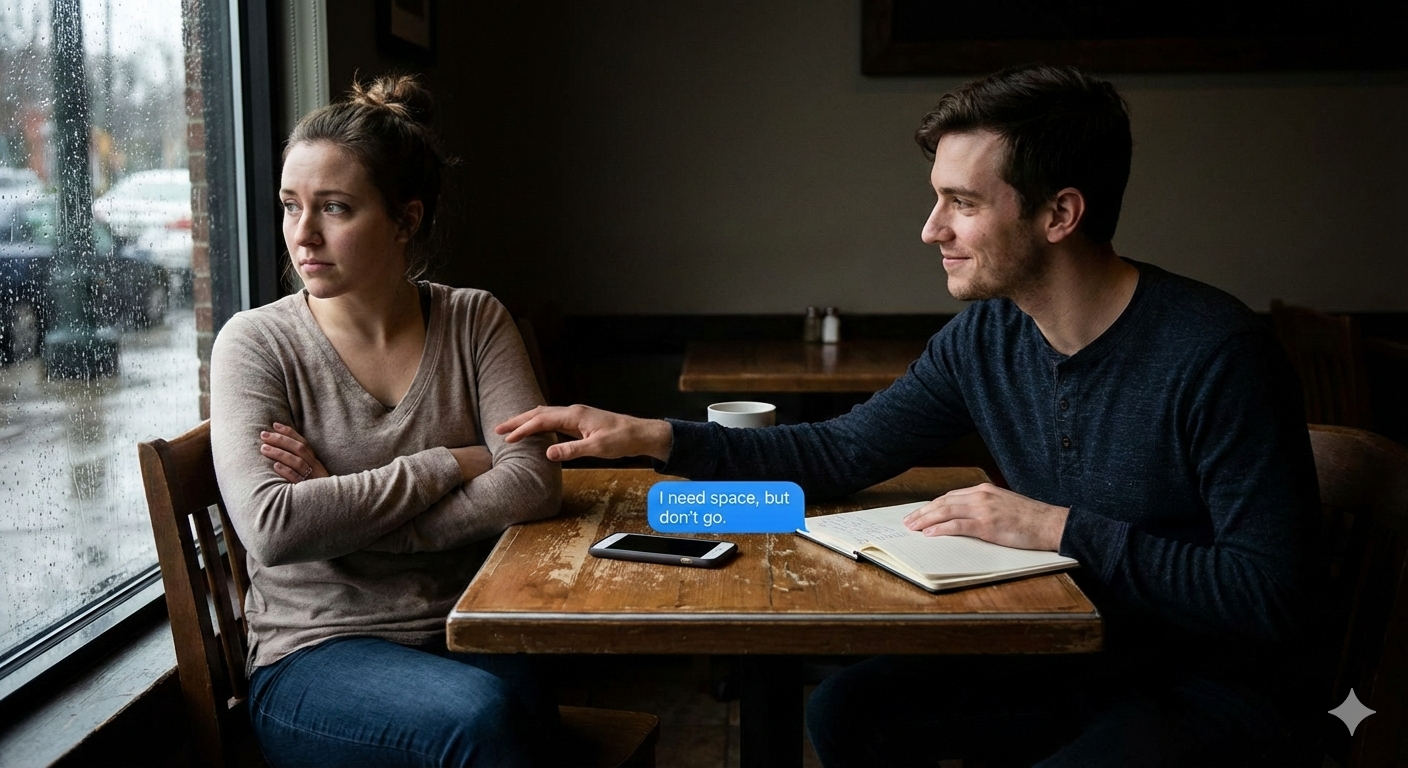
Dating a Fearful Avoidant? Buckle Up, Friend – Here’s the Real Tea
You ever fall head over heels for someone who lights up your phone at 2 a.m. with heart emojis… then ghosts you for four days straight? Yeah, me too. That rollercoaster you just felt in your chest? Welcome to **dating a fearful avoidant**. Pull up a chair, grab your coffee (or wine, no judgment), and let’s unpack this together because I’ve been exactly where you are – confused, obsessed, and googling at 3 a.m.
First Things First: What the Heck Is a Fearful Avoidant Anyway?
Okay, quick attachment theory crash course without the textbook snooze-fest.
There are four main attachment styles:
– Secure (the chill unicorns)
– Anxious (hi, that’s sometimes me)
– Avoidant (dismissive-avoidant – the “I’m fine alone” crew)
– And then… the spicy chaos goblin: **fearful avoidant** (also called disorganized)
A fearful avoidant wants love so badly it hurts… but they’re also terrified of it. They crave closeness like oxygen, then freak out the second they actually get it. Sound familiar?
They basically have one foot on the gas (“I love you, stay forever!”) and one foot slamming the brakes (“OMG get me out of here!”). It’s not you. It’s literally their nervous system doing the Macarena.
The Classic Fearful Avoidant Moves You’ll Recognize Immediately
I swear these people all read the same secret handbook:
– Hot and cold on steroids – one day they’re planning your future kids’ names, the next they need “space” (eye roll)
– They’ll trauma-dump on date three, then disappear when you try to support them
– Amazing texters… until feelings get real, then radio silence
– They pull you close with vulnerability, then push you away when you mirror it back
– “I’m scared you’re going to leave” immediately followed by behavior that basically guarantees you will
Ever dated someone who says “I’ve been hurt before” and then proceeds to recreate the exact same hurt with you? Yep. That’s the fearful avoidant special.
Why Do They Do This? (The Trauma Backstory Nobody Asked For But Everyone Needs)
Most fearful avoidants grew up with caregivers who were… let’s just say inconsistent as hell. One day mom/dad was loving, the next day scary or completely checked out. Their little kid brain learned: **“People I love the most can destroy me.”**
So now as adults, intimacy = danger. Their body literally goes into fight-or-flight when someone gets too close. It’s not manipulation (though it feels that way). It’s survival.
## Red Flags vs. Green Flags – How to Tell If They’re Healing (or Just a Walking Disaster)
Red flags that scream “run”:
– They vanish for days with zero explanation
– Love-bombing followed by devaluation (classic push-pull)
– Refusing to define the relationship after months
– Making you feel crazy for wanting basic consistency
Green flags that they’re actually doing the work:
– They’re in therapy (and actually talk about it)
– They apologize and change behavior when they mess up
– They can talk about their fears without blaming you
– They let you in slowly but steadily (key word: steadily)
Dating Strategies That Actually Work (From Someone Who’s Survived This Twice)
1. Regulate Your Own Damn Nervous System First
You cannot pour from an empty cup, babe. If you’re anxious-attached (raises hand), dating a fearful avoidant will trigger every abandonment wound you have. Do your own work or you’ll both spiral.
Pro tip: When they pull away, do NOT chase. Go to the gym, call your bestie, touch grass. Their withdrawal is about THEM, not your worth.
2. Use the Magic Phrase That Calms Their Freak-Outs
When they start distancing, try this (calm voice, zero sarcasm):
“Hey, I notice you’ve been quieter lately. I’m here whenever you’re ready to connect – no pressure.”
Then actually mean it. Drop the rope. This gives them safety to come back without shame.
3. Set Boundaries Like Your Life Depends On It (Because Your Sanity Does)
Healthy example:
“I really like you, but disappearing for days without a word makes me feel awful. If you need space, just tell me – I can handle that way better than silence.”
Unhealthy example:
Texting 47 times “why are you ignoring me???” (Been there. Don’t recommend.)
4. Celebrate the Baby Steps
Did they text back within 24 hours instead of 4 days? Did they actually apologize instead of deflecting? Did they let you see them cry? These are HUGE wins for a fearful avoidant. Praise it like they just cured cancer.
The Million Dollar Question: Can You Actually Have a Healthy Relationship With a Fearful Avoidant?
Short answer: Yes, but only if they’re actively healing.
I dated one who was in therapy twice a week, reading all the attachment books, and doing the work. We’re still friends – he’s now in the healthiest relationship of his life (not with me, lol). I’ve also dated ones who refused to look at their patterns and… well, let’s just say I’ve blocked more numbers than I care to admit.
The difference? Self-awareness and willingness to change.
The Hardest Part Nobody Talks About
Sometimes loving a fearful avoidant means accepting that **you might be the safe person who helps them realize they want to heal… but not the person they heal with**.
And that sucks. Like, ugly-cry-in-the-shower sucks. But would you rather be someone’s wake-up call or their permanent chaos partner?
When to Walk Away (And How to Actually Do It)
Walk away when:
– Your self-esteem is in the toilet
– You’re constantly managing their emotions
– They refuse to take any accountability
– You’ve become the pursuer in a one-sided chase
How to leave without triggering their abandonment meltdown:
1. Be clear, kind, and firm
2. Don’t JADE (justify, argue, defend, explain)
3. Block if necessary (protect your peace, queen)
Example script:
“I’ve realized this dynamic isn’t healthy for me anymore. I care about you, but I need to step away. Please don’t reach out – I need space to heal.”
Then actually don’t respond when they inevitably breadcrumb you six weeks later. You’re not a boomerang.
The Healing Path (For Them AND For You)
If you’re the fearful avoidant reading this (hi love!):
– Therapy. Seriously. EMDR and somatic work are gold.
– Read “Attached” by Levine and Heller
– Practice naming your emotions out loud (terrifying but life-changing)
– Let people love you even when it feels like dying
If you’re dating one:
– Work on becoming more secure yourself (it’s magnetic to them)
– Celebrate your own consistency – you’re showing them what safe love looks like
– Have compassion but NEVER at the expense of your boundaries
Frequently Asked Questions About Dating a Fearful Avoidant
Alright, let’s tackle the questions I get hit with the most – either in my DMs or from my own late-night spirals back in the day. FYI, these are the ones that keep popping up when people are knee-deep in this mess.
Do fearful avoidants actually love you, or is it all fake?
They do love you – deeply, even. But their love comes with a massive side of terror. They might not say it often or show it consistently, but signs like opening up about traumas, being present when they’re not triggered, or fighting their urge to run are their version of “I love you.” It just doesn’t always feel like the steady love we’re used to.
Can a relationship with a fearful avoidant ever work out long-term?
Absolutely, but it hinges on them doing the inner work. If they’re in therapy, owning their patterns, and slowly building trust? I’ve seen it turn into something beautiful. Without that commitment to healing? It’s usually a repeat cycle of heartbreak.
How do I know if they’re pulling away because of their attachment style or because they’re just not into me?
Great question, and a painful one. If it’s the attachment style, the pull-away often comes right after intense closeness – like after a great date or vulnerable talk. If they’re truly not into you, the hot phases fade altogether. But honestly? Consistent inconsistency is the hallmark here.
Will a fearful avoidant come back after pulling away or breaking up?
They often do – that push-pull is their MO. But “coming back” doesn’t mean they’re ready for healthy love. Unless they’ve done real work in the meantime, it’s usually just the cycle restarting. Protect your heart first.
Is it my job to fix them or help them heal?
Nope, not even a little. You can be supportive and understanding, but healing is 100% on them. Trying to “fix” them usually leads to you losing yourself in the process. Be a partner, not a therapist.
What if I’m anxious-attached – are we doomed?
Not doomed, but it’s a tough combo (anxious + fearful avoidant is basically fireworks). Your need for reassurance can trigger their fear, and their withdrawal can amp up your anxiety. Both of you working on becoming more secure is the only real shot.
How long should I give them space when they deactivate?
As long as they need, but with boundaries. A simple “Take the time you need, I’m here when you’re ready” works wonders. Days or a week? Okay. Weeks turning into months with zero communication? That’s not space – that’s avoidance.
Do fearful avoidants cheat or have lots of casual partners?
Some do, especially if unhealed – casual feels safer than real intimacy. But it’s not a rule. Many crave deep connection but sabotage it instead of cheating.
Final Thoughts (From Someone Who’s Lived This Mess)
Dating a fearful avoidant taught me more about myself than any secure relationship ever did. I learned where I abandon myself to keep others comfortable. I learned that real love doesn’t feel like constant whiplash.
So if you’re in the trenches right now, crying over someone who can’t choose you consistently – I see you. I’ve been you. And I promise it gets better when you choose YOU.
You deserve someone who stays. Someone who texts back. Someone whose love doesn’t come with a side of panic attacks.
And hey – sometimes the fearful avoidant becomes that person… but only after they’ve done the work. Your job isn’t to wait around while they figure that out.
You’ve got this. Go be someone’s peaceful Sunday morning instead of their 3 a.m. anxiety attack. You deserve that kind of love.
(Now go delete their number and book that therapy appointment. Doctor’s orders ;))